Here’s what a hockey World Cup would look like in a 48-team FIFA format

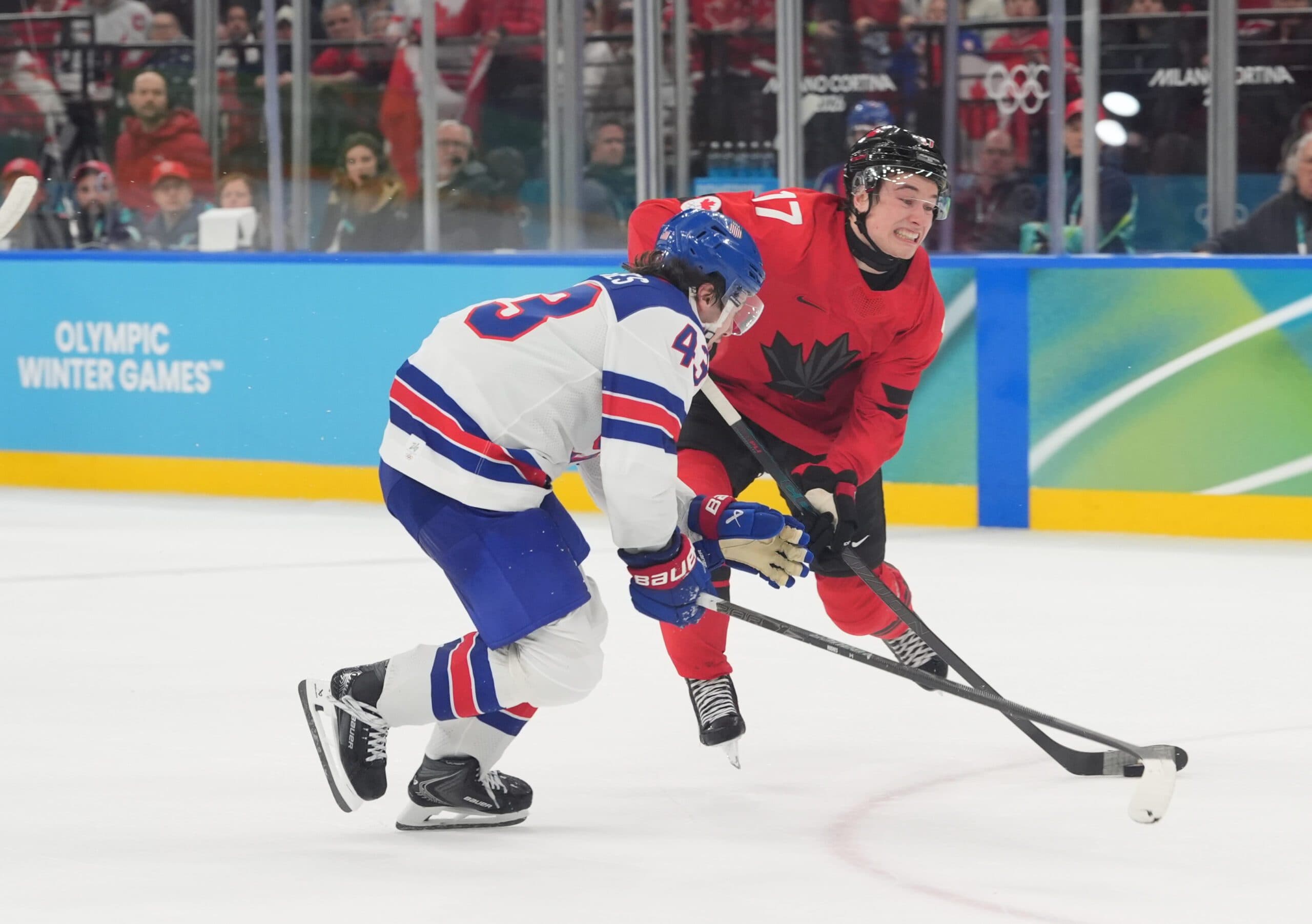
June 2026 promises to deliver an epic run in men’s pro spots.
We’ll witness the Stanley Cup Final and NBA Finals as usual, with Major League Baseball and the F1 season in full swing, plus the U.S. Open in golf and Wimbledon in tennis at the month’s end. But the 2026 FIFA World Cup launches June 11 as well, with North America playing host.
Whether you’re a diehard fan of ‘The Beautiful Game’ or not, it’s hard not to respect the pageantry, passion and especially the scale of the World Cup. The upcoming tourney will feature 48 teams spread across 12 groups – the largest field ever. The excitement is palpable because, relative to a lot of international team sports tournaments, anything can happen in the World Cup.
Consider that…
– Six different nations have won the past six World Cups: Brazil, Italy, Spain, Germany, France and Argentina
– The most recent World Cup in 2022 included the 12th– and 22nd-ranked nations reaching the final four
– The 2018 World Cup’s final four consisted of the fifth-, seventh-, 12th– and 15th-ranked nations
It feels like more than a dozen teams have genuine chances not just to compete but to win the entire tournament. We aren’t so lucky in best-on-best men’s hockey. Canada, USA and Sweden, consensus top-three or four teams most years, have won every men’s best-on-best tournament since 2002, a period including eight competitions. We’ll see a single-game upset from time to time, but the talent discrepancy outside the top handful or so teams is so great that the tournaments are built from elite-only pools of eight to 12 teams for the World Cup of Hockey or Winter Olympics.
Still, it’s fun to imagine what a hockey tournament equal to the soccer version’s magnitude would look like. Purely for the wonder of it all: let’s map out a 48-team men’s hockey World Cup.
THE ‘SELECTION’ PROCESS
Since we can’t dream up imaginary qualifying-match results, and we don’t have regional confederations that account for geographical quotas they way they do in futbol, we’ll use the current IIHF World Rankings for our top 48. That list is determined by, per the IIHF, “awarding points for the final positions in the last four IIHF World Championships and in the last Olympic Ice Hockey Tournament.”
I recognize that the in-progress 2026 Men’s World Championship will affect the rankings after it ends this weekend but, given this entire exercise is a just-for-fun hypothetical, we don’t need to wait for that information.
CURRENT IIHF TOP 48 WORLD RANKINGS
(As of May 25, 2026)
1. USA
2. Switzerland
3. Canada
4. Sweden
5. Czechia
6. Finland
7. Germany
8. Denmark
9. Slovakia
10. Latvia
11. Austria
12. Norway
13. Kazakhstan
14. France
15. Slovenia
16. Hungary
17. Great Britan
18. Italy
19. Poland
20. Japan
21. Romania
22. Ukraine
23. South Korea
24. Lithuania
25. China
26. Estonia
27. Spain
28. Netherlands
29. Croatia
30. Serbia
31. Israel
32. United Arab Emirates
33. Iceland
34. Australia
35. Belgium
36. Bulgaria
37. New Zealand
38. Chinese Tapei
39. Turkey
40. Thailand
41. Kyrgyzstan
42. Turkmenistan
43. Mexico
44. Luxembourg
45. Georgia
46. South Africa
47. Bosnia & Herzegovina
48. Hong Kong, China
*Russia and Belarus were not included in the rankings due to the ongoing ban from IIHF competition
THE GROUP DRAW
We’ll follow the current FIFA format for determining the pots from which groups are drawn – with a slight modification since we’ll operate with a single host nation rather than the three for the 2026 FIFA World Cup.
With the goal of fostering parity, placing all the best teams in single pot ensures they won’t be drawn into the same initial groups. France will stand in as the “host” placeholder here given the next Olympics, the 2030 Winter Games, take place in the French Alps.
POT 1: The top 11 teams in the world, plus a host nation
1. USA
2. Switzerland
3. Canada
4. Sweden
5. Czechia
6. Finland
7. Germany
8. Denmark
9. Slovakia
10. Latvia
11. Austria
14. France
POT 2: The next 12 top nations, host excluded
12. Norway
13. Kazakhstan
15. Slovenia
16. Hungary
17. Great Britan
18. Italy
19. Poland
20. Japan
21. Romania
22. Ukraine
23. South Korea
24. Lithuania
POT 3: The next 12 highest-ranked teams
25. China
26. Estonia
27. Spain
28. Netherlands
29. Croatia
30. Serbia
31. Israel
32. United Arab Emirates
33. Iceland
34. Australia
35. Belgium
36. Bulgaria
POT 4: The 12 lowest-ranked teams
37. New Zealand
38. Chinese Tapei
39. Turkey
40. Thailand
41. Kyrgyzstan
42. Turkmenistan
43. Mexico
44. Luxembourg
45. Georgia
46. South Africa
47. Bosnia & Herzegovina
48. Hong Kong, China
THE GROUPS
Here’s how the groups shake out after I mimicked the FIFA format and performed random draws to place a team from each pot into every group.
Group A
USA (#1)
Slovenia (#15)
Estonia (#26)
Luxembourg (#44)
Group B
Switzerland (#2)
Italy (#18)
Iceland (#33)
Hong Kong, China (#48)
Group C
Canada (#3)
Great Britain (#17)
Bulgaria (#36)
Kyrgyzstan (#41)
Group D
Sweden (#4)
Ukraine (#22)
Israel (#31)
Turkmenistan (#42)
Group E
Czechia (#5)
Japan (#20)
Netherlands (#28)
Thailand (#40)
Group F
Finland (#6)
Lithuania (#24)
Serbia (#30)
Georgia (#45)
Group G
Germany (#7)
Norway (#12)
Spain (#27)
Turkey (#39)
Group H
Denmark (#8)
Poland (#19)
United Arab Emirates (#32)
Bosnia & Herzegovina (#47)
Group I
Slovakia (#9)
South Korea (#23)
China (#25)
New Zealand (#37)
Group J
Latvia (#10)
Kazakhstan (#13)
Croatia (#29)
Chinese Taipei (#38)
Group K
Austria (#11)
Hungary (#16)
Australia (#34)
South Africa (#46)
Group L
France (#14)
Romania (#21)
Belgium (#35)
Mexico (#43)
Observations
Though Germany and Norway represent two top-12 teams in Group G and Latvia and Kazakhstan are a tough tandem to unseat in Group J, there’s arguably no true Group of Death featuring at least three competent teams. That means the Round of 48 could be somewhat of a dud, with Group I perhaps the likeliest to bring an upset given it its No. 2 and No. 3 teams, South Korea and China, are only four spots apart in the IIHF Rankings.
Our host France gets a pretty easy draw, even with Pierre-Edouard Bellemare’s retirement, so it should advance past the group stage to the Round of 32.
But would a field this deep yield any kind of surprise that could shake up the international hockey power structure? It’s highly unlikely. There are only 14 or 15 teams here with even the remote possibility of beating anyone on any given day. So while this exercise is fun to map out just to see what the groups would look like, in the end it tells us the IIHF is doing things right by keeping the pool relatively shallow at the highest level.
_____
POST SPONSORED BY bet365
_____