2026 NHL Trade Deadline winners and losers: Avalanche lap field as other Cup contenders whiff

That was…interesting. Trade Deadline Day 2026 played quite the game of chicken. It yielded 19 total deals, fewer than we saw last year, and the number was looking even smaller before a bunch of GMs slipped their trade calls in under the wire.
What happened? The trading was likely hindered by a concoction of (a) the looming playoff salary cap, (b) the block on double salary retention within a 75-day period and (c) the fact so many of the best available players had term left on their contracts and thus weren’t must-trade players Friday if their GMs’ asking prices weren’t met.
So while we saw a handful of significant swaps happen, grading out which teams fared the best and worst is as much about the moves that didn’t happen.
Welcome to my 2026 NHL Trade Deadline winners and losers.
First, some disclaimers:
(a) The list factors in trades made in the past two months, as I consider them “deadline deals” in spirit. We shouldn’t penalize a team for completing its shopping early, after all.
(b) If a team doesn’t appear on the list, it means I graded its deadline haul as merely OK, not significantly great enough nor poor enough to warrant mention in here. A good example would be the Tampa Bay Lightning nabbing Corey Perry. They did just fine adding an experienced 40-year-old clutch scorer to a dressing room he knows from his previous tour with the Bolts in 2021-22, but he isn’t an earth-shaking acquisition. Today, we focus on the teams that flourished or flopped on a larger scale.
WINNERS
Anaheim Ducks
Even if he doesn’t re-sign, John Carlson makes for a helluva rental. He’s a massive upgrade for a power play that ranks 23rd in the NHL, and he could lead an excellent apprenticeship for young Jackson LaCombe. The Ducks deepened an already-deep blueline, and they’re so flush with prospects that punting a conditional first-round pick and a third-rounder was chump change for GM Pat Verbeek. In an extremely winnable Pacific Division, the Ducks gained major ground on their competition Friday.
Colorado Avalanche
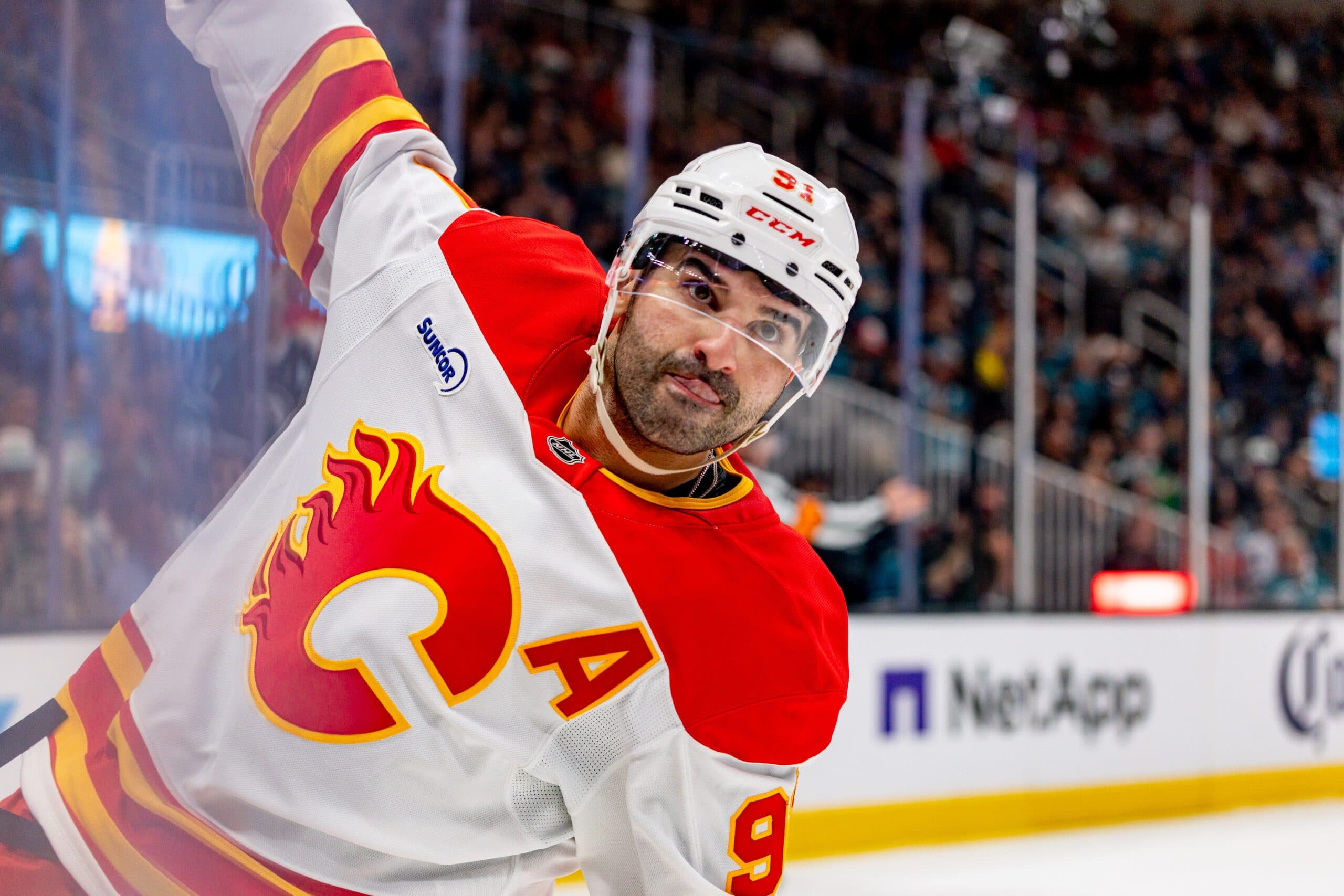
Given how underwhelming the deadline had gone for most of the league’s top Stanley Cup contenders, even getting Nicolas Roy as a third-line center, plus steady defensemen Brett Kulak, had Colorado trending toward winner status. But Chris MacFarland, consistently one of the league’s most aggressive GMs, showed up the field with a late-announced acquisition of Nazem Kadri, who last suited up for Colorado when it hoisted the Stanley Cup in 2021-22. Kadri brings jam and, just as importantly, scoring ability to a powerhouse team that has somehow been awful on the power play this season. Does this mean Roy is your…fourth-line center now? Bravo, Colorado. As a bonus, the Calgary Flames retained $1.4 million annually on Kadri through the end of his deal in 2028-29.
Edmonton Oilers
Hey, before you judge: look around the league. Landing Jason Dickinson and Connor Murphy may not feel sexy, but the Oilers addressed their top roster needs in acquiring them: third-line center, right-shot defenseman and not one but two members of the NHL’s top-ranked penalty kill coming over to help an ailing penalty kill. It was no use chasing a goaltender if his name wasn’t Sergei Bobrovsky, so the Oilers fared well, especially when we consider how few playoff contenders really moved the needle with their trades this week.
St. Louis Blues
The Blues had easily the best, deepest, most interesting pool of assets to dangle on Deadline Day. So many of them stayed put, from Colton Parayko to Jordan Binnington to Jordan Kyrou to Robert Thomas, but it’s crucial to remember they all have lots of term left on their contracts and can still be dangled leading up to the 2026 Draft, when GM Doug Armstrong and GM-elect Alexander Steen will have more suitors to work with. They did tidy work moving Brayden Schenn and Justin Faulk, who will be 36 and 35, respectively, when their contracts end. Their total haul from the New York Islanders and Detroit Red Wings for both includes two first-round picks (one is conditional), plus a pair of intriguing prospects in Marcus Gidlof and Dmitri Buchelnikov. Gidlof, acquired from the Isles, is a towering goaltender with the ceiling to be a starter someday, while Buchelnikov is one of the KHL’s best young players. The Blues did strong work and still have plenty more chips to play with come June.
Toronto Maple Leafs
Context is everything at the deadline. The Leafs are big-time losers for 2025-26 as a whole, to be clear. But they’re Trade Deadline winners for finally recognizing their situation. They did well to turn third-line center Roy into a first-rounder during a down year for him, and they were wise to cash out their pending UFAs in Bobby McMann, who has been a revelation but is already 29 as a late bloomer, and Scott Laughton, a beloved dressing room presence but merely a bottom-six forward. Neither player netted GM Brad Treliving a first-round pick, but the Leafs still got something for both; seeing the clock reach 3:00 p.m. ET with nothing for either guy would’ve been disastrous. The Leafs didn’t trade their way into Round 1 or 2 of this draft, but they can still get there using their assets that have term left. Maybe they move the likes of Oliver Ekman-Larsson, Max Domi and Anthony Stolarz in the offseason.
Utah Mammoth
Sure, there’s some risk in acquiring MacKenzie Weegar, who is 32 and under contract until he’s 37. But I love the aggression from Mammoth GM Bill Armstrong, who had accumulated more than enough picks and prospects and recognized that it was time to throttle up. Weegar can still vacuum up minutes as a well-rounded top-four blueliner. With him on board, the Mammoth improved more than any of the teams below them on the playoff bubble in the West.
NOTABLE IN MURKY MIDDLE
Buffalo Sabres
We might view the Sabres closer to winners had we not known what could have been. Parayko would’ve been a much more interesting add than Logan Stanley and Luke Schenn. Those two blueliners bring size and viciousness, with Schenn also carrying some of the league’s best intangibles as a veteran dressing room leader, but neither grades out as a particularly good actual defender. Both players are rentals as pending UFAs, and Buffalo gave up a prospect in Isak Rosen who has 25 goals in 38 games in the AHL this year. I don’t hate the deal, as it still deepens Buffalo’s D-corps, and Sam Carrick, acquired from the New York Rangers, will bring energy to Buffalo’s bottom six. But I envisioned some splashier upgrades for a Sabres team that could win one or more playoff rounds.
Dallas Stars
The Stars have made three consecutive Western Conference Finals. They moved Tyler Seguin’s $9.85-million cap hit to season-ending LTIR for full relief this week. They needed a top-nine forward and a right-shot defenseman. Aren’t these all characteristics of a team that should be all-in? They technically checked both items off their shopping list, acquiring left winger Michael Bunting and defenseman Tyler Myers, but I expected a bigger swing from GM Jim Nill. Meanwhile, the Stars’ direct competition, the Avs, got the player Dallas really could’ve used in Kadri. That stings.
Detroit Red Wings
…OK, Yzerplan, we see you. We were watching you closely. So was captain Dylan Larkin after his public expression of disappointment last year. It looked like another year of nothing, but the Red Wings pulled out the Faulk trade late in the day. His minute-munching ability on ‘D’ will bring welcome support to Moritz Seider and Simon Edvinsson. I would’ve liked to see Detroit add a high-impact forward, but at least they did something of consequence.
Nashville Predators
Talk about being caught in purgatory. The Preds don’t have Barry Trotz’s successor lined up for the GM chair. They’re in the playoff hunt but not in a playoff spot right now. So they…straddled the fence and dealt a few expiring pieces in Bunting, Michael McCarron and Cole Smith. Doing so weakened the current group enough to make the playoffs a difficult proposition…so should the Preds have explored larger sell-off moves involving Steven Stamkos or Jonathan Marchessault or Ryan O’Reilly? It’s complicated, as it’s a matter of whether those players wanted to go – and what the next GM’s vision will be. I can therefore understand why the Preds had to hedge.
New York Islanders
I won’t deny the vibes around the Isles are impeccable this season, with budding superstar defenseman Matthew Schaefer taking our breath away nightly. Brayden Schenn is a solid veteran add, a Stanley Cup winner and leader who can play center or wing and perhaps push youngster Calum Ritchie lower in the lineup into more sheltered matchups. But GM Mathieu Darche surrendered a first and third-rounder plus a good prospect in Gidlof to get a past-his-prime Schenn. The Isles are not the Red Wings or Sabres, bursting with prospects and desperate to end long playoff droughts. The Isles’ drought is one year. They just traded Brock Nelson and Noah Dobson to kickstart their retool last year. It feels a little early in the franchise’s ascension to surrender a first and a prospect. But I will give some credit to Darche for upgrading his team on a day when most of the Metro Division sat on its hands.
New York Rangers
Here’s an example of why we can’t judge teams solely on their actual deadline days. The Rangers still get points for the Artemi Panarin trade, which netted them prospect Liam Greentree, while their returns for Carrick and Carson Soucy included third-round picks. I expected GM Chris Drury to make bigger headlines Friday, but Vincent Trocheck didn’t have to move; he has term left. Same goes for Adam Fox. The work didn’t all have to be done on March 6.
Vancouver Canucks
Vancouver managed to slip out from under Conor Garland’s six-year contract before it began; he’s a good player, but a rock-bottom team like the Canucks doesn’t want to be attached to term like that, so it was fine work dealing him to the Columbus Blue Jackets. The Canucks also managed to sell off Myers, David Kampf, Lukas Reichel and, earlier this winter, Kiefer Sherwood, so they’ve at least started the rebuild. But pending UFAs Teddy Blueger and Evander Kane remain Canucks, and the Elias Pettersson rollercoaster drags on, so it wasn’t a flawless deadline for GM Patrik Allvin.
LOSERS
Carolina Hurricanes
The Canes were players at the previous two deadlines, adding big-name stars. Going into today, they had the cap space, the prospect capital, the hunger to push for a Stanley Cup…and all they added was a blunt tool in fourth-line banger Nic Deslauriers. Very disappointing for a team that clearly needs a No. 2 center, as the promising Logan Stankoven hasn’t proven quite ready to consistently produce offense at that level.
Los Angeles Kings
The Kings made a statement when they paid up for Panarin just before the Olympic trade freeze. They understood they needed a marquee scorer to complement their defensively stingy group. They were infusing their lineup with sufficient talent to give Anze Kopitar one final playoff run before his retirement. The days that followed included a horrific broken leg for left winger Kevin Fiala at the Olympics, ending his season; a stretch of six losses in eight games; firing coach Jim Hiller; playoff odds dropping to 31.6 percent; trading left winger Warren Foegele for a pick, one year after he set career bests in goals and points; and trading Corey Perry for a second-rounder on Friday. Woof. They strapped Panarin to a sinking ship, evidently. Might GM Ken Holland want his top prospect Liam Greentree back if L.A. could have a do-over? Just to muddy things more, the Kings doubled back on themselves with a late-day rental of Laughton. The net change amounts to Fiala, Foegele and Perry for Panarin and Laughton. And let’s not forget they traded Phillip Danault earlier this season. Can someone explain what GM Ken Holland’s plan is?
Minnesota Wild
If we zoom out at the entire Wild season: they’re winners, sure. They extended Kirill Kaprizov, they traded for Quinn friggin’ Hughes, and they’ve spent most of this season as one of the NHL’s top teams. But when GM Bill Guerin sacrificed center Marco Rossi and prospects Zeev Buium and Liam Ohgren as part of the Hughes blockbuster, Guerin established that the Wild were very much all-in as Stanley Cup contenders this season. Moving Rossi also created a must-fill crater on the depth chart at center. To keep up with its powerhouse divisional neighbors, the Avalanche and Stars, Minnesota had to acquire a scoring-line center Friday. It didn’t. Ryan Hartman, Joel Eriksson Ek, Danila Yurov and McCarron are not a championship-caliber quartet up the middle. Friday was a missed opportunity and, like the Stars, they Wild now have to face Kadri, a player they really could’ve used, as a divisional rival.
Montreal Canadiens
The Canadiens’ pin-drop-quiet Trade Deadline would’ve made sense to me a year ago, when they were just breaking through as a playoff threat for the first time since Kent Hughes took over as GM. But this season? They have the horses to be special. They have more prospects than they can graduate to the big club. If they secured a second-line center and maybe some goalie insurance, they could’ve jumped into true Cup contender status. But here’s where the playoff cap hamstrung them; a year ago, maybe Patrik Laine and his $8.7 million don’t reappear until the postseason, but they had to factor in his AAV and couldn’t find a taker for him on Friday, which presumably stopped them from landing their desired prize – which was reportedly Kadri. You never want to see a good team fail to plug a clear hole.
Seattle Kraken
I’ve said it before and I’ll say it again: making the playoffs in season 2 of their existence was the worst thing ever to happen to the Kraken. It scrambled their expectations, they added too many veterans too soon, and they got just good enough to not pick high enough in the draft to land true can’t-miss foundational prospects. Here they are today, barely holding a playoff spot, so mid that their leading scorer, Jordan Eberle, has just 42 points. They’d be better off taking a step backward but are too good to turn back, so they opted not to move any of their pending UFAs, from Jamie Oleksiak to Eeli Tolvanen to Jaden Schwartz, and they re-signed Eberle Friday for two more years. The Kraken are doomed to many more seasons of mediocrity if they keep fighting so hard to maintain their mediocre nucleus of veterans. The McMann rental just added another Kraken-tier player to the pile.
Washington Capitals
Ugh. If we strip the emotion away: fine, the Caps did well enough in their return for Carlson. His contract is expiring and, with Alex Ovechkin’s deal also up and no guarantee he’ll continue his NHL career, GM Chris Patrick has to prepare for the franchise’s next era. But when Ovechkin, your franchise’s all-time greatest icon, calls today the saddest of his career? Yeah, you might have botched the handling of this one. The Caps are only four points out of a Wildcard spot in the East, and they just removed their second-longest-tenured player in team history. Was the morale damage to the veteran core worth the return? It’s highly questionable.
_____
POST SPONSORED BY bet365
_____
Recently by Matt Larkin
- NHL Trade Board: Will a new team swoop in for Colton Parayko?
- Olympic Stock Watch: Whose NHL trade value changed for better or worse in Milan?
- NHL Trade Board: as Olympic mini-deadline arrives, will Leafs turn seller?
- What did the past 10 Stanley Cup champions do at the Trade Deadline?
- How every contending team’s GM has behaved at previous NHL Trade Deadlines