Daily Faceoff is a news site with no direct affiliation to the NHL, or NHLPA

NHL Scratches & Line Changes

Graves is expected to be back in the Penguins' lineup on Tuesday.

With Pittsburgh expected to sit nearly half their regular roster on Tuesday vs. St. Louis, Ryan Graves will draw back into the lineup for just the 2nd time since March 22nd. The 30-year-old shut down defensemen has appeared in 21 games with Pittsburgh this season, struggling offensively with just one goal and and 20 SOG while constantly finding himself the odd-man out of the lineup.

Ryan Graves
Clifton is expected to be back in the Penguins' lineup on Tuesday.

Clifton took a rest for Pittsburgh's previous game but will draw back into the lineup vs. St. Louis for Game 82 on Tuesday. The 30-year-old shutdown defensemen has appeared in just over half of Pittsburgh's games this season, with two goals, six points, 53 PIMs and 34 SOG in 49 games played.

Connor Clifton
Shea is expected to be back in the Penguins' lineup on Tuesday.

Shea has appeared in every game for Pittsburgh this season but two after resting for their previous game but will draw back into the lineup for Game 82 vs. St. Louis on Tuesday. The 29-year-old has been a key piece to Pittsburgh's back end and has taken a huge step forward in his third NHL season, posting career highs in nearly all statistical categories including games played (79), goals (6), points (34), plus/minus (+30) and PIMs (22).

Ryan Shea
Hayes is expected to be back in the Penguins' lineup on Tuesday.

Hayes was a healthy scratch for Pittsburgh's previous contest but will return to the lineup for his 16th game of the season on Tuesday vs. St. Louis. The 23-year-old rookie has enjoyed a brief, but successful first stint in the NHL, with three goals, 12 PIMs and 22 SOG in 15 games played.

Avery Hayes
Kindel is expected to be back in the Penguins' lineup on Tuesday.

Kindel was given a game off to rest for the Penguins' previous contest but will draw back into the lineup for Game 82 on Tuesday vs. St. Louis. The 18-year-old future star has enjoyed an incredibly successful rookie campaign in the NHL with 17 goals, 34 points and 150 SOG in 76 games played.

Ben Kindel
Mantha is expected to be back in the Penguins' lineup on Tuesday.

Mantha had appeared in every game for Pittsburgh prior to sitting their previous contest due to rest but will return to the lineup for Game 82 on Tuesday vs. St. Louis. The 31-year-old has enjoyed a resurgent season after signing a one-year contract with Pittsburgh in the offseason, putting up 30-goals and 60+ points for the first time in his 11-year career.

Anthony Mantha
Wotherspoon (rest) is not expected to play on Tuesday.

With Pittsburgh's final game of the season meaning very little, Parker Wotherspoon will be a scratch as he rests on Tuesday in St. Louis. The 28-year-old has had an impressive first full campaign with Pittsburgh, picking up career highs in nearly all statistical categories including games played (80), goals (3), points (30) and +/- (+17).

Parker Wotherspoon
Girard (rest) is not expected to play on Tuesday.

With just one game remaining in the regular season, Pittsburgh is awaiting its first-round playoff matchup against the Philadelphia Flyers and will rest several key players, including Samuel Girard. The 27-year-old Girard has battled injuries since being acquired by Pittsburgh earlier this season, but was starting to come around in recent games, tallying five assists in his final eight contests.

Samuel Girard
Letang (rest) is not expected to play on Tuesday.

With just one game remaining in the regular season, Pittsburgh is awaiting its first-round playoff matchup against the Philadelphia Flyers and will rest several key players, including Kris Letang. The veteran 38-year-old defenseman returns to the postseason for the first time in four years, deployed in a much smaller role with the team. Still, Letang ends the 2025-26 season with a very respectable 34 points (3G / 31A) in 74 games.

Kris Letang
Karlsson (rest) is not expected to play on Tuesday.

With just one game remaining in the regular season, Pittsburgh is awaiting its first-round playoff matchup against the Philadelphia Flyers and will rest several key players, including Erik Karlsson. The 35-year-old Swedish defenseman had a dyanmic season with Pittsburgh, especially the latter half, scoring 31 points (11G / 20A) in his final 23 games. Jake Livanavage will draw into the lineup as Karlsson's replacement.

Erik Karlsson
Chinakhov (rest) is not expected to play on Tuesday.

With just one game remaining in the regular season, Pittsburgh is awaiting its first-round playoff matchup against the Philadelphia Flyers and will rest several key players, including Egor Chinakhov. After several seasons of disappointing performance and inability to be a consistent offensive contributor with the Columbus Blue Jackets, the 24-year-old Chinakhov has been dynamic since joining the Penguins, scoring 36 points (18G / 18A) in 43 games. Noel Acciari will draw into the lineup as Chinakhov's replacement.

Egor Chinakhov
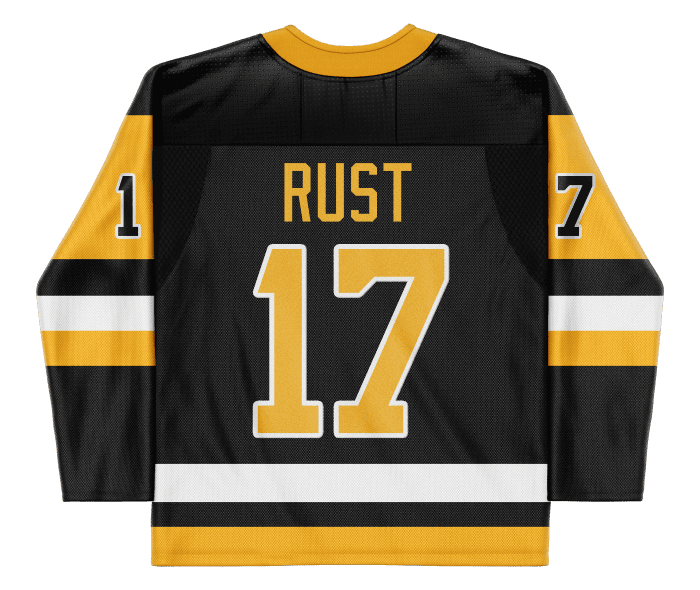
Rust (rest) is not expected to play on Tuesday.

With just one game remaining in the regular season, Pittsburgh is awaiting its first-round playoff matchup against the Philadelphia Flyers and will rest several key players, including Bryan Rust. The 33-year-old Rust missed a game last week due to a lower-body injury, so the extra rest on Tuesday will be an added bonus. He concludes the 2025-26 season matching his career high with 65 points (29G / 36A) in 72 games.

Bryan Rust
Rakell (rest) is not expected to play on Tuesday.

With just one game remaining in the regular season, Pittsburgh is awaiting its first-round playoff matchup against the Philadelphia Flyers and will rest several key players, including Rickard Rakell. The 32-year-old Swedish forward concludes the 2025-26 season with 48 points (24G / 24A) in 60 games. Avery Hayes will draw into the lineup as Rakell's replacement.

Rickard Rakell
Malkin (rest) is not expected to play on Tuesday.

With just one game remaining in the regular season, Pittsburgh is awaiting its first-round playoff matchup against the Philadelphia Flyers and will rest several key players, including Evgeni Malkin. The 39-year-old Malkin concludes the 2025-26 season with 61 points (19G / 42A) in 56 games for his best offensive production in half a decade (1.09 PTS/GP). Anthony Mantha will re-enter the lineup as Malkin's replacement.

Evgeni Malkin
Crosby (rest) is not expected to play on Tuesday.

With just one game remaining in the regular season, Pittsburgh is awaiting its first-round playoff matchup against the Philadelphia Flyers and will rest several key players, including Sidney Crosby. At age 38, Crosby has another point-per-game season under his belt, concluding the 2025-26 campaign with 74 points (29G / 45A) in 68 games. The 18-year-old Ben Kindel will draw into the lineup as Crosby's replacement.

Sidney Crosby
Liljegren will be a healthy scratch on Tuesday.

After appearing in his first game since March 14th in Washington's previous contest, Timothy Liljegren will head back to the press box for Washington's final game of the season on Tuesday as Dylan McIlrath returns to the lineup. Liljegren has rarely appeared for the Capitals since being acquired at the trade deadline from San Jose, with no points, two PIMs and five SOG in four games played since the trade.

Timothy Liljegren
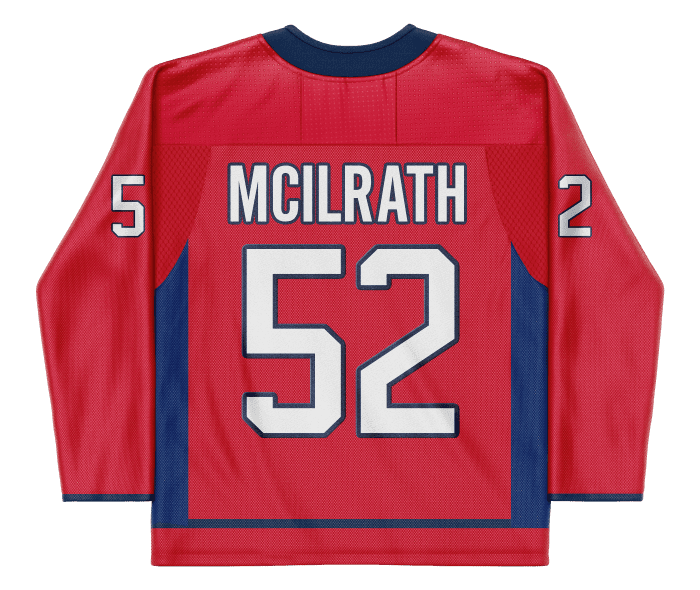
McIlrath will draw back into the Capitals' lineup on Tuesday.

Despite not appearing in the Capitals' lineup since March 3rd, Dylan McIlrath will draw back into Washington's lineup for their season finale in Columbus on Tuesday. He is expected to replace Timothy Liljegren in the lineup and will hope to pick up his first point of the season in his 13th appearances with the Capitals.

Dylan McIlrath
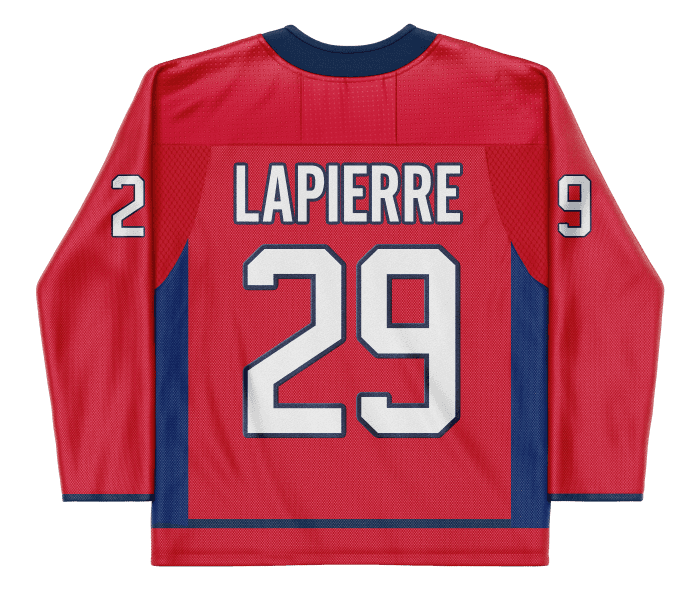
Lapierre will draw back into the Capitals lineup on Tuesday.

Lapierre has been a healthy scratch for Washington's previous three contest but will draw back into the Capitals' lineup on Tuesday in Columbus. The 24-year-old has appeared in the majority of Washington's games this season, with four goals, 16 points and 31 PIMs in 73 games played.

Hendrix Lapierre
Gallagher is expected to draw into the Canadiens lineup on Tuesday.

After not being a healthy scratch for 14 seasons, Brandan Gallagher was held out of Montreal's lineup for the previous four games but will draw back in for Game 82 in Philadelphia on Tuesday. The 33-year-old gritty winger is having a down season offensively, with just six goals, 22 points and 39 PIMs in 76 games played while averaging 12:22 TOI.

Brendan Gallagher
Veleno is expected to draw into the Canadiens lineup on Tuesday.

Veleno was a healthy scratch for Montreal's previous contest but will draw back into the lineup for their final game of the season on Tuesday in Philadelphia. The 26-year-old has struggled to produce in a bottom-six role in his first season in Montreal, with just two goals, four points and a -12 plus/minus in 60 games played.

Joe Veleno

NHL Line Changes

NHL line changes are essential in keeping a team’s players fresh on the ice over the course of a hard-fought 60-minute matchup. With shift changes occurring rapidly throughout any given game, we are here to provide you with everything you need to know regarding line changes.

Making sure a team is efficiently making line changes can be essential to their success within a matchup, as it ensures that the players needed on the ice to gain the upper hand are ready to spring into action at a moment’s notice. For NHL daily fantasy hockey players, knowing how to track line changes can be important as you look to keep tabs on the players you’ve drafted to your lineup and their production.

On The Fly

Unlike other sports where play must come to a stop in order to make a player substitution, in hockey, players can switch in-and-out of play on the fly. This helps in keeping the breakneck pace of the contest going, increasing the amount of action from whistle-to-whistle and avoiding any unnecessary stoppages.

On the fly changes are generally done when a team is in possession of the puck and are looking to make a transition play from their own end to their opponent’s side of the rink. Players must be aware of the action around them when making an on the fly substitution as a poorly timed switch could leave themselves vulnerable to an odd-man rush on the other end.

In order to make successful line changes on the fly it is up to the team coaching staff to keep players informed on when their line matchups are due to hit the ice. Generally, with both forwards and defensive pairings, line changes go from the first line trickling its way down to the fourth. Depending on the situation of the game, coaches may opt to give a particular line more playing time, increasing the amount of shifts they receive.

Play Stoppages

NHL line changes can also be made during stoppage of play, with both sides being given the chance to put fresh bodies on the ice ahead of the upcoming faceoff. Examples of a play stoppage that would allow teams to make line changes are after minor or major penalties, offsides, icing, and puck out of play calls. These line changes are often much more calculated as each coach has time to survey the other team and decide what would be the most advantageous line combination that will provide them with a competitive advantage.

Bench Configuration

It may seem like a confusing and unorganized area of the game, but in hockey there is a fair amount of strategy put into the bench configuration within a matchup. With both benches positioned in the neutral zone, making sure that players can quickly hop the boards and get into the game is key to making successful line changes. Benches are generally set so that players entering into the game on the fly are in the best possible position on the ice to fulfill their role.

Generally, a bench in hockey will have the forwards positioned closest to the attacking zone, whereas the defenceman will be situated closest to their defensive zone. This separates the forward lines and defence pairings from on another on each end of the bench so that groups can easily stay together. From here the rested forwards ready to enter into the game will be placed in the centre of the bench, positioned near the coaches so they can easily receive instruction before hitting the ice. This is also advantageous as players coming off the ice for a line change will often enter from the opposite side they came onto the ice from, preventing any unnecessary traffic or confusion when making a change. While each team may have their own preferences on how to configure their bench, these are the most common ways they are run.

Line Change Rules

Understanding the rules of NHL line changes in hockey is an understated part of the game and when used correctly can swing the tide of a matchup in your favour. Without in-depth understanding of line changes in hockey, this can cause costly mistakes that can result in minor penalties, lengthy shifts, or mismatches off a faceoff.

Last Line Change

The last line change rule exists so that the home team is able to make an adjustment to whatever lineup the visiting team decides to roll out after a stoppage in play. This rule was designed to make NHL line changes efficient, as well as provide both sides with the chance to strategically place their players based on the lines sent out by their opponents.

For example, after the whistle, the home team’s coach can elect to make a line change to the personnel on the ice. After that, the visiting coach will send out any new players into the game off of a line change. Thanks to the last line change rule, the home team coach is now granted the opportunity to make one last line change before play resumes to counter whatever line changes were made by the opposing team.

For daily fantasy sports bettors this is where having ample knowledge of each NHL team can come in handy. You can envision how each team may look to gain a competitive advantage over their opponent during a possession, drafting players who are set up for success within a matchup.

Penalties & Infractions

While NHL line changes are meant to be an efficient and simple way to keep the game being played at a fast-pace with minimal interruptions, there is still room for serious error during these substitutions. It’s not uncommon to see teams assessed for a penalty due to a botched line change, resulting in a power play opportunity for the opposing team.

A common penalty called as a result of a poorly executed line change is “too many men on the ice”. This penalty results when the offending team has six or more skaters (including the goaltender) on the ice at any given time and comes in physical contact with the puck. While players entering in the game during a shift change are eligible to hop the boards and get in on the action once their teammate is within five feet of the bench, they must time this correctly or they could be hit with a premature substitution infraction. When a bench minor penalty such as too many men on the ice is assessed, it is up to the team’s head coach to decide who serves the penalty based on the players currently on the ice at the time of the penalty.

Another line change infraction to be aware of is in the case of an icing call. Icing is called when a team plays a puck from their own side of the red centre line across the red goal line in their opponents end. When icing is called, a faceoff will be taken from the end of the team that committed the infraction. During an icing call the team that was called for icing is not able to make any line changes, meaning they are forced to keep all players who were on the ice at the time of the infraction in the contest. Their opponents however are allowed to make any line change they desire, making this an incredibly beneficial call if they can strategize correctly.

How Line Changes Impact Fantasy Hockey

NHL line changes can come fast and suddenly so it can be challenging to keep track of certain players over the course of a matchup. This can make it difficult for avid fantasy hockey managers and sports bettors to know when the players they’ve wagered on are on the ice. Some broadcasts now incorporate various display mechanics that allow for you to see who is on the ice at any given time, making shift change tracking much simpler than ever before. Be sure to stay up-to-date on the jersey numbers of any players on your fantasy roster or that you bet on as a failsafe so that you can find them quickly while watching the action unfold.

Knowing how long a typical shift for a player entering into a matchup is can be an advantageous piece of knowledge for fantasy managers and bettors alike. The longer a player’s shift lasts, the higher their chances of registering a point or other statistical milestone which can help you in winning your fantasy matchups and/or bets placed on a game.